
Published September 27, 2026 · 8 min read · Stop treating client hosting as a side chore and start running it properly
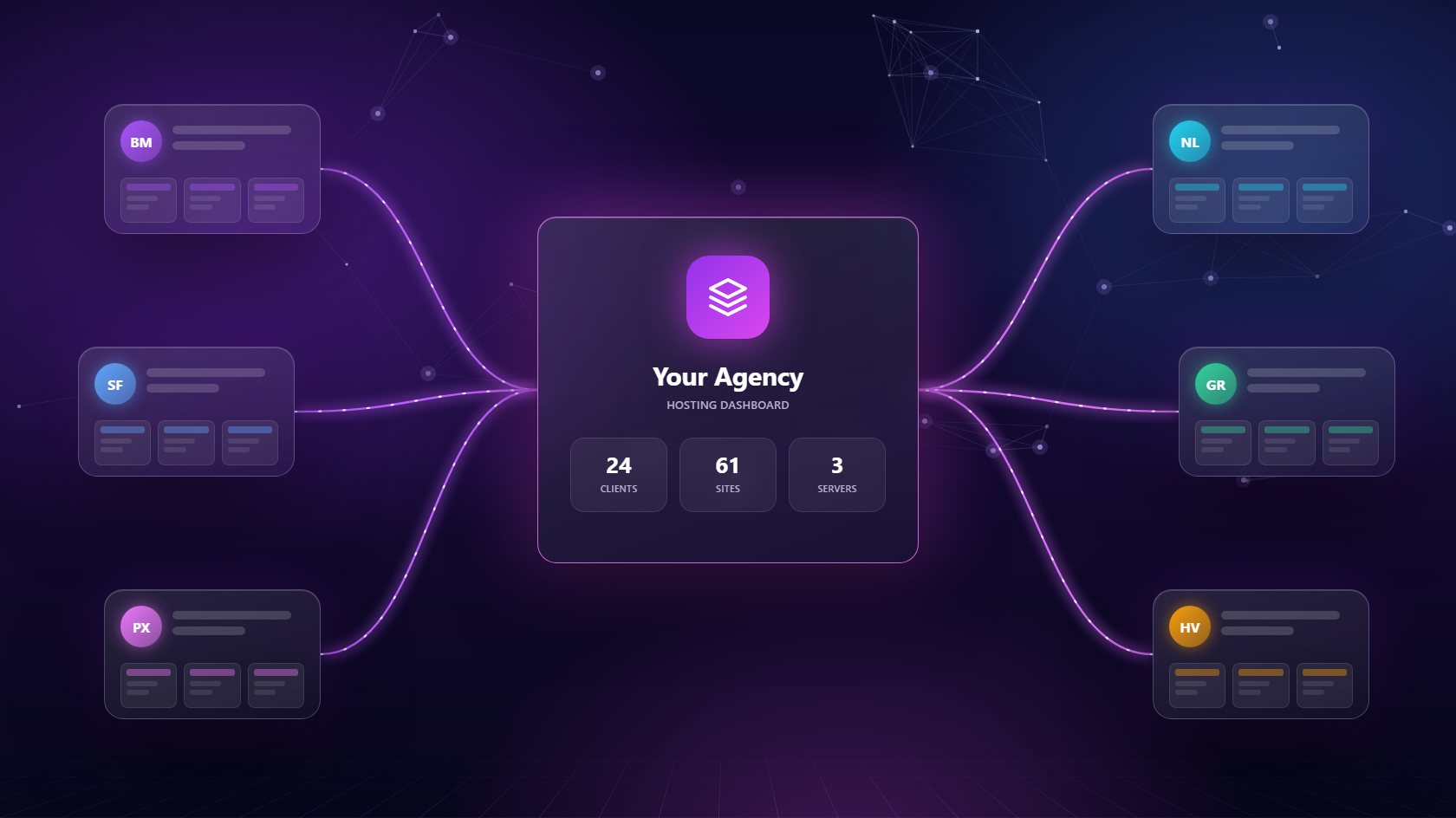
Most web agencies end up in hosting by accident. A client asks you to "just take care of it", then another one does, and before long you're juggling a dozen logins across three hosting companies. A hosting control panel for agencies is designed to end that mess. Instead of treating hosting as a side chore, it gives you one place to run every client site - with your name on it. Here's why it matters, and how it differs from the generic panels most agencies start with.
Hosting looks cheap on paper. A shared plan costs a few dollars a month, and you can pass that cost on to the client. The real cost shows up somewhere else: in your time. Every password reset, every "my email isn't working" message and every slow-site complaint lands on your desk, even when the problem sits with a hosting company you don't control.
Multiply that by twenty clients and you have a part-time job nobody is paying for. Logins are scattered across different providers, renewal dates hide in different inboxes, and nobody on the team has the full picture. When a site goes down at night, someone has to remember which host it's on before they can even start fixing it. A hosting control panel for agencies fixes the root of that problem by bringing every client, every site and every server into one view. Instead of hunting for information, your team opens one dashboard and sees exactly what's running, where it lives and who it belongs to.
A generic panel answers one question: how do I manage this server? A hosting control panel for agencies answers a second, more important one: how do I manage these clients? That shift changes the whole design. Clients become real accounts with their own logins, not folders on a shared box. Hosting becomes a set of plans you design and sell, not a single bill you absorb.
In practice, this means features like client accounts with their own dashboards, packages with enforced limits on sites, storage and email, and built-in invoicing. It also means white-labeling - your logo, your colors and your domain on the dashboard clients log into. Under the hood you still get the technical side: isolated sites, SSL, backups, databases and firewall rules. The difference is that it's all organized around the way an agency actually works, with clients at the center rather than servers. When everything is arranged around the people you serve, daily decisions become simpler and much faster to make.
When a client's hosting bill comes from someone else, that someone else owns part of the relationship. The client logs into their dashboard, sees another company's logo, and starts to wonder why they pay you at all. If that host emails them about an upgrade, you may not even hear about it until the client asks you what it means.
A hosting control panel for agencies keeps that relationship with you. Clients log into a branded dashboard on your own domain, receive invoices with your name on them, and contact your team when they need help. Every touchpoint reinforces that you are their web partner, not just the people who built the site once. This matters more than it sounds. Clients who feel looked after rarely shop around, and clients on your hosting are far more likely to come back to you for redesigns, new features and marketing work. Hosting becomes the thread that keeps the relationship going between bigger projects. Our post on white-label hosting goes deeper on this.
Project work is lumpy. One month you land a big website build, the next month is quiet. Hosting smooths that out. Every client on a hosting plan pays every month, whether you're busy or not, and that steady income makes it easier to plan, hire and say no to projects that aren't a good fit.
The math is simple once you run your own panel. A single VPS can host many small client sites. If the server costs a flat amount each month and each client pays a modest hosting fee, the margin grows with every new site you add. A hosting control panel for agencies makes this visible by showing revenue by client and by server, so you know exactly what each machine earns against what it costs. You can add care plans on top - updates, backups, uptime checks - and charge for the peace of mind clients actually want. Over a year or two, that recurring income often becomes one of the most reliable parts of the business.
You don't need hundreds of clients to benefit. Most agencies are ready once they host five or more sites, or as soon as they notice hosting tasks eating into billable hours. Other signs include clients asking for email on their own domain, needing different PHP versions on different sites, or simply being tired of logging into several hosting accounts every week.
Switching is less painful than it sounds. With a modern hosting control panel for agencies like NextaPanel, you connect a VPS you already pay for, let the panel set it up automatically, create a couple of hosting plans and start moving clients over one at a time. There's no need to migrate everything in one weekend. Start with new clients, then move existing ones as their renewals come up. Our migration guide walks through doing it without downtime. Within a few months, every client lives in one dashboard under your brand, and hosting stops feeling like a chore you inherited by accident.
It is a hosting dashboard designed around clients rather than just servers. On top of the usual site, database and email tools, it adds client logins, hosting plans with limits, invoicing and white-label branding so an agency can run hosting as its own service.
cPanel and reseller accounts were built for one owner or for reselling someone else's server. A hosting control panel for agencies runs on servers you own, puts your brand on the client dashboard, and includes billing without extra plugins.
Most agencies see the benefit at around five hosted sites, or as soon as hosting tasks start eating into billable hours. With flat per-server pricing, it pays off quickly even for small teams.
NextaPanel is the hosting control panel for agencies that want clients, plans and billing in one branded dashboard.
See Client Management